For OEMs, pack designers & system integrators
Fourteen LFP formats. One manufacturer. No middle layer.
You are designing a pack, which means you need a cell whose behaviour you can model — not a distributor's line card. And the question you cannot get a straight answer to is who actually made the cell, because the company quoting you usually did not.
Vision has manufactured cells since 1994 across 5 production bases, and is listed on the Shenzhen Stock Exchange: 002733. The range runs from 20C high-power 50Ah through 628Ah storage formats rated above 6,000 cycles. When you ask about electrode chemistry, you are asking the company that coats it.
Drawings, discharge curves, and cycle-life test conditions for the formats you name. Reply within one business day.
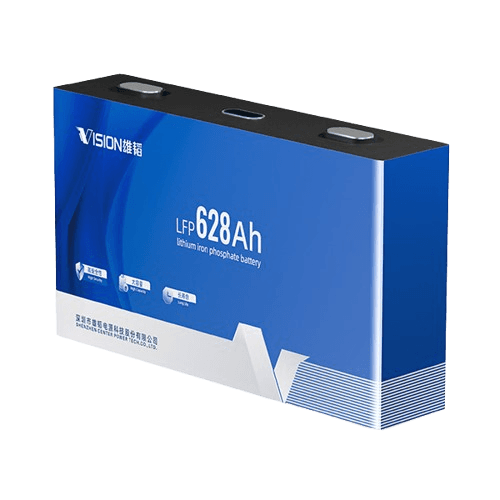
- 50–628 Ah
- Published format range
- 1C – 20C
- Discharge rate grades
- 6,000+ cycles
- Storage-grade published claim
- 5 plants
- Manufacturing bases
Sound familiar?
The cell is the one component you cannot substitute late.
- You asked three suppliers who manufactures the cell and got three answers that were all a trading company.
- The cycle-life figure came with no depth of discharge, no C-rate, and no temperature — so it cannot be used for anything.
- You need internal resistance and a discharge curve to finish the thermal model, and you were sent a glossy brochure.
- The mechanical envelope is 2 mm off and nobody will confirm the tolerance in writing.
- You are being asked to sign a pack warranty on top of a cell warranty from a company you cannot audit.
- The BOM is fixed at design freeze, and the cell decision is the earliest one you cannot walk back.
The published range
Fourteen formats, and what each one is actually for.
Below is every LFP format Vision publishes, with the manufacturer's own rate class and cycle claim. Where a figure is not published, the table says not published — because on a page like this, a blank is more useful than a guess.
| Format | Capacity | Rate class | Published cycles | Typical use |
|---|---|---|---|---|
| LFP-50Ah 6C95% state of charge in 15 minutes | 50 Ah | 4C / 6C | Not published | Fast-charge motive and high-turn duty |
| LFP-50Ah 10CHigh power density | 50 Ah | 10C | Not published | Pulse and high-rate discharge |
| LFP-50Ah 20CHighest published discharge rate in the range | 50 Ah | 20C | Not published | Starting, engine crank, short-burst power |
| LFP-60Ah 2C120A continuous at 2C | 60 Ah | 2C | Not published | General high-efficiency packs |
| LFP-60Ah 4C240A continuous at 4C | 60 Ah | 4C | Not published | High-power fast-discharge packs |
| LFP-60Ah 10CHigh-safety construction | 60 Ah | 10C | Not published | High-rate with elevated safety margin |
| LFP-100Ah 1CCost-optimized electrode coating | 100 Ah | 1C | 2,000+ | Base-station backup, general storage |
| LFP-100Ah 1C (long cycle)Optimized anode particle, reduced surface defects | 100 Ah | 1C | 6,000+ | Cycling storage where life dominates cost |
| LFP-100Ah 2CFull discharge in 30 minutes | 100 Ah | 2C | Not published | Short-duration, high-power storage |
| LFP-280AhLithium-ion slow-release optimization | 280 Ah | 0.5C (2 h) | 6,000+ | C&I and utility storage; used in our air-cooled containers |
| LFP-314AhHigher energy per cell at the same footprint class | 314 Ah | 0.5C (2 h) | 6,000+ | C&I and utility storage |
| LFP-348AhUsed in the 6.48 MWh liquid-cooled container | 348 Ah | 0.5C (2 h) | 6,000+ | Large containerized storage |
| LFP-580AhNano-material coating, improved electrolyte | 580 Ah | 0.5C (2 h) | 6,000+ | High-energy storage, fewer connections per MWh |
| E71352207LFP-628AhLargest published format | 628 Ah | 0.5C (2 h) | 6,000+ | Utility storage, peak shaving, EV charging buffer |
On the two 100Ah 1C entries. The published pages claim 2,000+ cycles on one and 6,000+ on the other while calling both LFP-100Ah1C in the body copy. They are different grades and we are confirming the correct designation with the factory rather than printing a guess. Ask for the long-cycle grade by name.
Cycle claims are conditional, always. Every figure in that column is stated at a particular depth of discharge, C-rate, and cell temperature. Ask us for the test conditions alongside the curve. A cycle number without its conditions is not a specification.
Dimensions and weights are released per inquiry. They are not on the manufacturer's public pages, so they are not invented here. Name the formats you are evaluating and the drawings come back with the curves.
Storage formats
The five large-format cells our own containers are built from.
These are not cells we specify from a vendor. They are the cells we manufacture and then design our containerized systems around, which is why the system pages and this page quote the same part numbers.
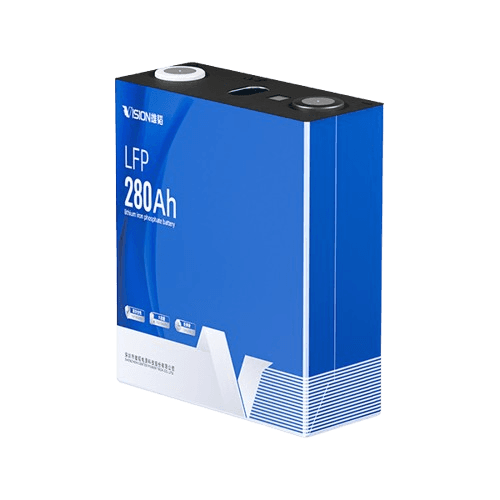
280 Ah
6,000+ cycles
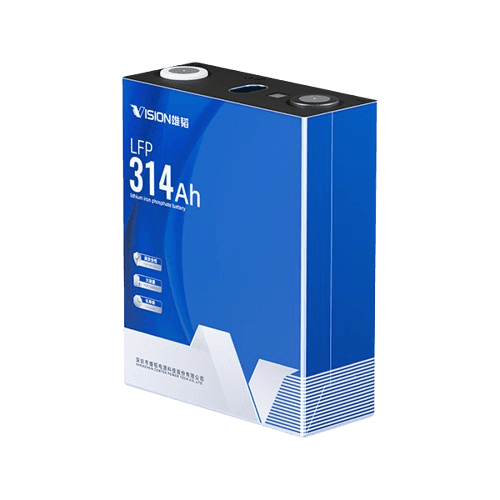
314 Ah
6,000+ cycles
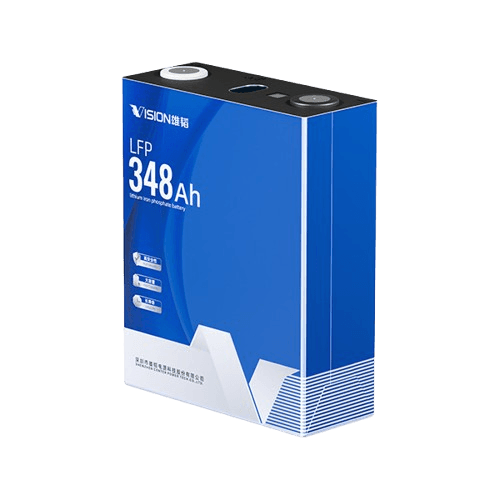
348 Ah
6,000+ cycles
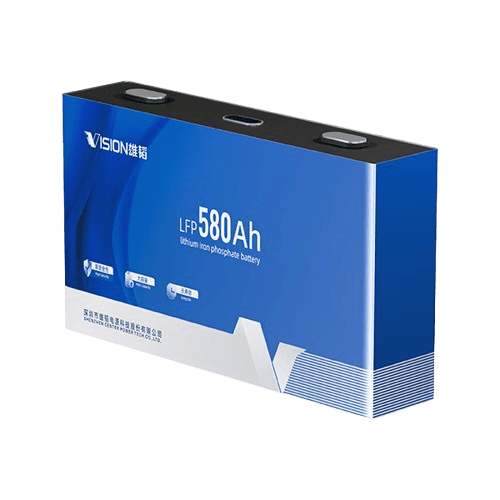
580 Ah
6,000+ cycles
628 Ah
6,000+ cycles
Buying at the system level instead? See the containerized storage range.
What the range lets you do
Specifications are only interesting if they change your design.
20C discharge available at 50Ah
You can hit a high pulse requirement without oversizing the pack for current capability alone. That removes mass and cost from the enclosure, not just the cell count.
628Ah in a single prismatic cell
Fewer cells per megawatt-hour means fewer welds, fewer sense leads, and fewer connections to fail. Connection count is a reliability variable, and large format is how you reduce it.
95% charge in 15 minutes on the 6C format
Equipment can charge inside a shift change or a break rather than needing a second battery to swap in. That is a fleet-size decision, not a cell decision.
One manufacturer across 1C to 20C
You can qualify one supplier's process and chemistry, then use it across a product family from high-power to long-cycle instead of running parallel qualification programs.
Cells and integrated systems from the same company
If your product roadmap moves from buying cells to buying finished systems, the supplier does not change and the qualification does not restart.
Publicly listed on the Shenzhen Stock Exchange: 002733
Audited financials and public filings, which is what your procurement team's supplier-risk review is actually looking for. Most cell vendors at this scale cannot offer it.
How specification works
From duty cycle to a confirmed part number.
- 01
Send the duty cycle and the envelope
Pack voltage, peak and continuous current, runtime, ambient range, cycles per day, and the mechanical space you have. That is enough to eliminate ten of the fourteen formats immediately.
- 02
We send drawings, curves, and test conditions
Mechanical drawing, discharge curves, cycle-life data with the conditions it was measured at, and the transport documentation status for that revision. Including whatever is missing.
- 03
Sample, then confirm MOQ and lead time in writing
Validate against your own bench data before volume. Then we confirm minimum order, lead time, and landed cost for your quarter — as a commitment, not an estimate.
The objections, answered
What a pack designer is really weighing.
“Your published cell pages have no dimensions. That is amateur.”
It is a genuine gap and we are not going to pretend otherwise — an OEM cannot begin a design from those pages. The data exists; the publishing does not. Until it does, name a format and the drawing comes back the same day. We would rather be told this than have you quietly move on.
“How do I know the cell in month twenty is the same cell?”
Ask for the process control and incoming-material documentation during qualification, and ask for change notification terms in the supply agreement. A cell manufacturer can give you both; a trading company cannot, because it does not control the line. That difference is the reason to buy from the factory.
“A US or Korean cell reduces my supply-chain risk.”
For some programs that is the right call and we will tell you when we think it is. What we will not do is pretend tariffs and logistics are solved problems. Get a landed cost and a lead time from us for your specific quarter and compare it against a real alternative quote rather than an assumption.
“I need failure-mode data, not marketing features.”
Then ask for the abuse test reports — overcharge, over-discharge, short circuit, nail penetration, thermal stability — for the specific format. If a report does not exist for a format, you will be told that instead of being sent the report for a different one.
“Nobody on my engineering team has heard of Vision.”
Recognition and capability are different things. Vision has been manufacturing since 1994, ships to 100+ countries, and holds a public listing. The recognition gap in the US market is real and it is precisely what this site exists to close. Judge the documentation.
The cell is chosen at design freeze and lives for the life of the product. Every later decision — enclosure, thermal path, BMS, certification route — is downstream of it, which is why getting real curves in front of your thermal engineer now is worth more than a better price in month six.
Cell selection pack
Name the formats. We will send the drawings and the curves.
Mechanical drawings, discharge curves, cycle-life data with the conditions it was measured under, and transport documentation status — for the specific formats you are evaluating. If something does not exist for a format, the reply will say so.
Phone (408) 309-1021 · Monday–Friday, 8:00–5:00 Central
Email sales@visionbattery.us
Questions
What pack designers ask us first.
Why does this page not list cell dimensions and weights?
Because the manufacturer's own product pages do not publish them, and we are not going to invent numbers on a page whose entire purpose is that you can trust the numbers. Mechanical drawings, terminal detail, weight, internal resistance, and discharge curves exist for every format — they are released against a specific inquiry. Tell us the format and we will send the drawing.
Two of the 100Ah cells look like the same part number. Which is which?
That is a real inconsistency in the published documentation: one 100Ah 1C page claims 2,000+ cycles and another claims 6,000+, and both refer to the cell as LFP-100Ah1C in the body text. They are different grades. We are confirming the correct designation with the factory rather than printing a guess. If you are sizing a 100Ah pack, ask for the long-cycle grade explicitly and we will confirm the part number in writing.
What does “6,000 cycles” actually mean here?
It is the manufacturer's published cycle claim for that cell, and like every such claim it is stated at a specific depth of discharge, C-rate, and temperature. Those three conditions change the answer by a wide margin, which is why we would rather send you the curve for one format than repeat a single number across fourteen of them. Ask for the test conditions along with the curve — if a supplier will not give you both, the number is decoration.
Can I buy cells alone, or do I have to buy a system?
Cells alone is a normal way to work with us, and it is the reason this page exists separately from the system pages. We manufacture the cell and separately integrate systems from it — you are welcome to buy at either level.
What are the minimum order quantities and lead times?
Both depend on the format, the grade, and the quarter, so a number printed on a web page would be fiction by the time you read it. Send us the format and annual volume and we will come back with the current MOQ and a lead time we are prepared to put in writing.
Do the cells carry UN 38.3 for shipping?
Ask us for the current UN 38.3 test summary for the specific format and revision you intend to order, and we will send it or tell you plainly that we cannot. Transport documentation is a per-model, per-revision matter and a general assurance on a marketing page is worth nothing to your freight forwarder.
Why buy the cell from the same company that builds the container?
Because when a cycle-life warranty is called, one company owns the whole answer. Most integrators buy cells from a supplier they have never visited and then carry the performance risk themselves. We manufacture the cell and integrate the system, which removes a seam rather than moving it.